It's been a cool wet summer across most of Canada. And things have yet to heat up politically, despite a combined call from Idle No More organizers and Defenders of the Land for a 'Sovereignty Summer' of indigenous mass non-violent direct action.
But things could still get hot. Many of the possible flashpoints involve tarsands and pipelines, and have the potential to mobilize significant non-indigenous support (and opposition, for that matter!). For example, youth from the Dene Nation in northern Alberta have issued a call to shut down 'the Tar Sands Highway,' Hwy 63, on August 24th.
In the meantime, here's a piece giving historical context on the Idle No More movement, and its demands:
Timeline of Assimilation & Resistance – pdf
I would argue that if demands like those put forth by Idle No More seem unreasonable to mainstream Canadians, it's only because we don't know or understand the history of First Peoples and Euro-Canadians.
An earlier version of this piece appeared in The Leveller, in two parts.
Friday, August 2, 2013

Tuesday, June 18, 2013

Monday, May 6, 2013
In the future...
...only electronic forms of ownership will seem real.
Wars will no longer be fought over physical territory, real geography, but over abstract networks and nodes — volleys of electrons fired over sterile servers.
Wealth will become unreal. Men — and a few women — will become rich by indexing imaginary numbers, converting one illusory unit to another measurement of nothing and skimming off a few decimal marks.
Holding something in your hand will seem passé. Paying attention to what — or who — is in the room will seem quaint.
The real will be digitized and become obsolete.
People will be taught to hate the real, to find it dirty and dangerous. They will become ever-more isolated from the physical, the sensual, the fertile, whatever has odour or grit, whatever demands relationship or cannot be turned off, thrown out, put back on the shelf.
Locked into dream mirrors, sucked into screens of distraction, they will not even notice when all that is real disappears, poisoned and screaming.
Wars will no longer be fought over physical territory, real geography, but over abstract networks and nodes — volleys of electrons fired over sterile servers.
Wealth will become unreal. Men — and a few women — will become rich by indexing imaginary numbers, converting one illusory unit to another measurement of nothing and skimming off a few decimal marks.
Holding something in your hand will seem passé. Paying attention to what — or who — is in the room will seem quaint.
The real will be digitized and become obsolete.
People will be taught to hate the real, to find it dirty and dangerous. They will become ever-more isolated from the physical, the sensual, the fertile, whatever has odour or grit, whatever demands relationship or cannot be turned off, thrown out, put back on the shelf.
Locked into dream mirrors, sucked into screens of distraction, they will not even notice when all that is real disappears, poisoned and screaming.
Monday, April 15, 2013
I'm not poor, I'm money-free
This isn't a deprivation, it's liberation.
OK SO OCCASIONALLY IT'S A BIT STRESSFUL.
Money's a bit stressful too. Have you noticed how much time-energy-emotion rich people devote to their money and the stuff they buy with it?
What would I do with a million dollars? Try to figure out how to get rid of it as quickly as possible, and in as un-evil a way as possible.
OK SO OCCASIONALLY IT'S A BIT STRESSFUL.
Money's a bit stressful too. Have you noticed how much time-energy-emotion rich people devote to their money and the stuff they buy with it?
What would I do with a million dollars? Try to figure out how to get rid of it as quickly as possible, and in as un-evil a way as possible.
Wednesday, April 10, 2013
There is no solid ground on which to stand and evaluate others (and that's ok)
"Whatever seems to you to be obvious and inevitable is only so within some institutional or conventional structure, and that means that you can never operate outside some such structure."
– Stanley Fish
p. 370 of Is there a text in this class? The authority of interpretive communities. Harvard University Press, 1980.
"Relativist sociologists are not sawing the branch upon which they sit because they are not seated on it, and no one is or has ever been"
– Bruno Latour
Quoted in Jean-Guy A. Goulet's Ways of Knowing: Experience, Knowledge and Power Among the Dene Tha. (UBC Press, 1998), p. xliii
– Stanley Fish
p. 370 of Is there a text in this class? The authority of interpretive communities. Harvard University Press, 1980.
"Relativist sociologists are not sawing the branch upon which they sit because they are not seated on it, and no one is or has ever been"
– Bruno Latour
Quoted in Jean-Guy A. Goulet's Ways of Knowing: Experience, Knowledge and Power Among the Dene Tha. (UBC Press, 1998), p. xliii
Tuesday, April 2, 2013

Saturday, March 30, 2013
Wild rice & the ethics of appropriation
Since writing an assignment on wild rice — posted here — I've thought more about some ethical
questions it brought up. I've already dealt with the question of planting in wild areas in my last post. In this post, I want to talk about the ethics of cultivating a plant over which some indigenous people feel rather possessive.
Like I mention in the assignment, a
number of Ojibwe felt (at least as of the '80s) that wild rice had been stolen from them, and that
settlers should not grow or harvest it.
 I think it's important to respect this sentiment. Those who
don't, risk perpetuating and participating in the same paternalism and
colonialism that Europeans have inflicted on aboriginals since arriving on this continent.
I think it's important to respect this sentiment. Those who
don't, risk perpetuating and participating in the same paternalism and
colonialism that Europeans have inflicted on aboriginals since arriving on this continent.
But does 'respect' mean taking this as an absolute prohibition?
I suspect the 'why' in this case is quite broad. Indigenous people at contact considered themselves affluent, possessing all they needed and more. They became poor and needy when settlers took away their land and killed most of the animals and plants that they relied upon.
This is exactly what happened with wild rice. Wild rice was central to the Ojibwe economy at contact — and by extension, to their culture and spirituality. This continued in the days of the fur trade: wild rice was a significant trade item for the Ojibwe, and later a significant source of income.
But wild rice was 'stolen' from the Ojibwe by a three-pronged process. First, they lost access to most wild rice stands because of the colonization and the take-over of their traditional territory. Second, many stands were destroyed through environmental degradation. Third, a settler-owned wild rice industry was created, which marginalized Ojibwe producers as it adopted the methods of industrial agriculture.
In sum, wild rice once sustained them, no longer can, and is making settlers rich.
1) My explanation of the 'why' might be wrong. Talk to some folks — preferably elders — from wild-rice-harvesting indigenous groups about why they might not want others harvesting wild rice, and about your hopes to do so. Build relationship. If possible, learn from them how they do it. This is probably the most difficult of all the suggestions to pull off, but it is the ideal starting point.
That said, it might be easier than it seems. A good starting point might be the 'Wild Rice Celebration' that the Ardoch Algonquin seem to put on annually in Perth. They just took down the info on this past year's celebration from their website, but I think I saw a workshop specifically on wild rice among the schedule of speeches, powwows, etc. Keep your eyes peeled for next year, I guess.
Also, Plenty Canada has a program — "Our Traditions, Our Future" — which aims to build relationships among indigenous and non-indigenous communities through the "preservation, promotion, and sharing of indigenous knowledge." They've hosted workshops on a variety of traditional indigenous skills, including traditional wild rice management.
Neither website seems very active at the moment. Hopefully they'll revive themselves?
2) Don't be complicit with the system that has robbed indigenous peoples blind. Start by aligning yourself in solidarity with indigenous people who are resisting this system. Support indigenous nations in their struggles for self-determination, and to maintain, reclaim, and exercise sovereignty over their traditional lands. No individual or group can support themselves without a landbase and without the ability to determine their own destiny — and these are rights that are still being taken away from indigenous people today. (The Barriere Lake Algonquin are a local example). This is about justice, not charity.
3) If you buy wild rice, buy it from aboriginals. For example, Kagiwiosa Manomin operate in northwestern ontario, and they sell rice at a third of the price of our local Ottawa health food store.
4) Don't compete with aboriginals. Don't harvest from a stand that an indigenous group considers their own. If you're harvesting in the wild, learn something about the location. If the government calls it Crown Land and gives you permission, that doesn't mean you're necessarily in the clear. This is exactly what happened with the wild rice company who had provincial permits to harvest the Ardoch Algonquin stands in Mud Lake.
5) Don't compete with aboriginals. Don't sell wild rice for profit.
 I think it's important to respect this sentiment. Those who
don't, risk perpetuating and participating in the same paternalism and
colonialism that Europeans have inflicted on aboriginals since arriving on this continent.
I think it's important to respect this sentiment. Those who
don't, risk perpetuating and participating in the same paternalism and
colonialism that Europeans have inflicted on aboriginals since arriving on this continent.But does 'respect' mean taking this as an absolute prohibition?
Not necessarily, I think. Why do these aboriginals feel this way? My
hope is that if you were to respond to the 'why,' then the objection... might just
change. Who knows?
I suspect the 'why' in this case is quite broad. Indigenous people at contact considered themselves affluent, possessing all they needed and more. They became poor and needy when settlers took away their land and killed most of the animals and plants that they relied upon.
This is exactly what happened with wild rice. Wild rice was central to the Ojibwe economy at contact — and by extension, to their culture and spirituality. This continued in the days of the fur trade: wild rice was a significant trade item for the Ojibwe, and later a significant source of income.
But wild rice was 'stolen' from the Ojibwe by a three-pronged process. First, they lost access to most wild rice stands because of the colonization and the take-over of their traditional territory. Second, many stands were destroyed through environmental degradation. Third, a settler-owned wild rice industry was created, which marginalized Ojibwe producers as it adopted the methods of industrial agriculture.
In sum, wild rice once sustained them, no longer can, and is making settlers rich.
Given this, I'd like to offer some tentative suggestions for how a wild-rice-loving permie might ethically proceed:
1) My explanation of the 'why' might be wrong. Talk to some folks — preferably elders — from wild-rice-harvesting indigenous groups about why they might not want others harvesting wild rice, and about your hopes to do so. Build relationship. If possible, learn from them how they do it. This is probably the most difficult of all the suggestions to pull off, but it is the ideal starting point.
That said, it might be easier than it seems. A good starting point might be the 'Wild Rice Celebration' that the Ardoch Algonquin seem to put on annually in Perth. They just took down the info on this past year's celebration from their website, but I think I saw a workshop specifically on wild rice among the schedule of speeches, powwows, etc. Keep your eyes peeled for next year, I guess.
Also, Plenty Canada has a program — "Our Traditions, Our Future" — which aims to build relationships among indigenous and non-indigenous communities through the "preservation, promotion, and sharing of indigenous knowledge." They've hosted workshops on a variety of traditional indigenous skills, including traditional wild rice management.
Neither website seems very active at the moment. Hopefully they'll revive themselves?
2) Don't be complicit with the system that has robbed indigenous peoples blind. Start by aligning yourself in solidarity with indigenous people who are resisting this system. Support indigenous nations in their struggles for self-determination, and to maintain, reclaim, and exercise sovereignty over their traditional lands. No individual or group can support themselves without a landbase and without the ability to determine their own destiny — and these are rights that are still being taken away from indigenous people today. (The Barriere Lake Algonquin are a local example). This is about justice, not charity.
If you'll allow a plug for an organization that I'm involved with, you could do worse than to start with the Indigenous Peoples Solidarity Movement Ottawa — if you live in Ottawa, that is.
Plus, if you do all this, you might build the kind of relationships that could allow you to follow suggestion #1.
Plus, if you do all this, you might build the kind of relationships that could allow you to follow suggestion #1.
3) If you buy wild rice, buy it from aboriginals. For example, Kagiwiosa Manomin operate in northwestern ontario, and they sell rice at a third of the price of our local Ottawa health food store.
4) Don't compete with aboriginals. Don't harvest from a stand that an indigenous group considers their own. If you're harvesting in the wild, learn something about the location. If the government calls it Crown Land and gives you permission, that doesn't mean you're necessarily in the clear. This is exactly what happened with the wild rice company who had provincial permits to harvest the Ardoch Algonquin stands in Mud Lake.
5) Don't compete with aboriginals. Don't sell wild rice for profit.
Tuesday, March 26, 2013
Wild rice and the ethics of cultivation
Since writing this assignment I've thought more about some ethical
questions that it brought up. There are two issues that I see: planting into
wild areas, and cultivating a plant that some indigenous people feel
rather possessive over. I'll deal with the latter in my next post,
but for now, here's...
1) Planting wild rice in wild areas
Generally speaking, anyone with brains and respect for nature wants to leave wild areas untouched, or as untouched as possible. If you're going to plant wild rice, I think ideally you'd do it into bodies of water that you've created yourself. As long as you could create a spot with a steady flow of water, ponds and even swales seem like they could be possible sites. (And ideally, there would have been little or no natural life before you create that body of water — e.g. a manmade pool or lawn).
 On the other hand, I for
one would be tempted to try and sow some wild rice if I had access to stream, river or lakefront property
with the right conditions — including basically 'wild' and public waterways.
On the other hand, I for
one would be tempted to try and sow some wild rice if I had access to stream, river or lakefront property
with the right conditions — including basically 'wild' and public waterways.
Would this be inappropriate?
I don't think it has to be. It doesn't seem likely that wild rice could ever qualify as an 'invasive species.' It is native to Canada, and though its homeland seems to be Manitoba and northwestern Ontario, it has certainly been naturalized to the Ottawa River watershed.
Also, wild rice spreads very slowly. The only significant natural way its seed is spread is by water currents. There is no real way for it to get upstream, or across land — which is why there are often wild-rice-free waterways right next to other waterways with significant stands. As an annual, it is often out-competed by perennial reeds, cattails, bulrushes, and lily pads, who don't have to re-establish themselves each year.
Also, the Ojibwe that anthropologist Thomas Vennum describes in his book are reluctant to plant wild rice — they see doing so as unnatural. But they also have stories about which ancestors planted which stands. And they generally hold that that most of the rice in their territory — which basically corresponds to the wild rice's 'homeland,' as described above — was planted by them.
Meanwhile, William Dore documents many stands that have been planted by settlers in his book. It seems then, that most currently-existant wild rice stands were originally planted by humans.
But it would still be important to really know the spot you're trying to plant, and the wild rice plant itself (i.e. follow the first principle of permaculture). How would introducing wild rice into this ecosystem change it? Could you minimize the impact, ensuring that there was still habitat for all the pre-existing plants and animals?
Further to this, do you have what biologist William Dore calls 'open habitat' – spots that are regularly disturbed, so that perennial ecosystems cannot become well-established there? (These are wild rice's natural habitat — examples that he gives in his book on wild rice, which I quote in my assignment, include the "soil of deltaic deposits, flood-eroded beaches, drowned land, and especially, soft silty bottoms").
So do you have what I'm tempted to call 'open open habitat' — open habitat like Dore describes that hasn't already being colonized by other annuals? This would be the ideal place to plant wild rice.
Even if you have 'open habitat' that has been disturbed by a one-time event, wild rice might make a good pioneer species, that will help with the transition back to a perennial ecosystem.
In any case, when dealing with basically wild systems, it might be good to not only start but stay small and slow.
1) Planting wild rice in wild areas
Generally speaking, anyone with brains and respect for nature wants to leave wild areas untouched, or as untouched as possible. If you're going to plant wild rice, I think ideally you'd do it into bodies of water that you've created yourself. As long as you could create a spot with a steady flow of water, ponds and even swales seem like they could be possible sites. (And ideally, there would have been little or no natural life before you create that body of water — e.g. a manmade pool or lawn).

Would this be inappropriate?
I don't think it has to be. It doesn't seem likely that wild rice could ever qualify as an 'invasive species.' It is native to Canada, and though its homeland seems to be Manitoba and northwestern Ontario, it has certainly been naturalized to the Ottawa River watershed.
Also, wild rice spreads very slowly. The only significant natural way its seed is spread is by water currents. There is no real way for it to get upstream, or across land — which is why there are often wild-rice-free waterways right next to other waterways with significant stands. As an annual, it is often out-competed by perennial reeds, cattails, bulrushes, and lily pads, who don't have to re-establish themselves each year.
Also, the Ojibwe that anthropologist Thomas Vennum describes in his book are reluctant to plant wild rice — they see doing so as unnatural. But they also have stories about which ancestors planted which stands. And they generally hold that that most of the rice in their territory — which basically corresponds to the wild rice's 'homeland,' as described above — was planted by them.
Meanwhile, William Dore documents many stands that have been planted by settlers in his book. It seems then, that most currently-existant wild rice stands were originally planted by humans.
But it would still be important to really know the spot you're trying to plant, and the wild rice plant itself (i.e. follow the first principle of permaculture). How would introducing wild rice into this ecosystem change it? Could you minimize the impact, ensuring that there was still habitat for all the pre-existing plants and animals?
Further to this, do you have what biologist William Dore calls 'open habitat' – spots that are regularly disturbed, so that perennial ecosystems cannot become well-established there? (These are wild rice's natural habitat — examples that he gives in his book on wild rice, which I quote in my assignment, include the "soil of deltaic deposits, flood-eroded beaches, drowned land, and especially, soft silty bottoms").
So do you have what I'm tempted to call 'open open habitat' — open habitat like Dore describes that hasn't already being colonized by other annuals? This would be the ideal place to plant wild rice.
Even if you have 'open habitat' that has been disturbed by a one-time event, wild rice might make a good pioneer species, that will help with the transition back to a perennial ecosystem.
In any case, when dealing with basically wild systems, it might be good to not only start but stay small and slow.
Monday, March 25, 2013
Wild Rice & Permaculture
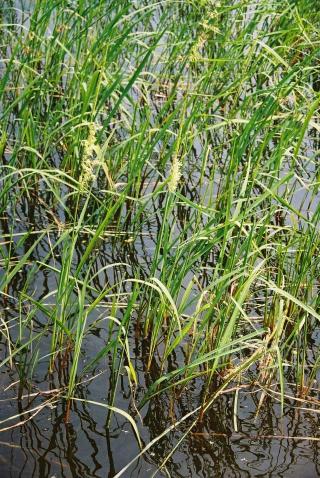
I did an assignment on wild rice for this permaculture course I took last fall. I wanted to learn how feasible it might be to gather wild rice, or even cultivate it.

Wild rice is the only cereal native to Canada. It is stupidly healthy, quite delicious, and has been gathered and cultivated by indigenous people for centuries, if not millennia.
Click the link below to see what I learned about it.

Wild rice is the only cereal native to Canada. It is stupidly healthy, quite delicious, and has been gathered and cultivated by indigenous people for centuries, if not millennia.
Click the link below to see what I learned about it.
Wild Rice & Permaculture — PDF
Wednesday, February 6, 2013
Koch Brothers
This is a pretty scary article. It outlines how, among other things, corporate elites are waging covert and costly campaigns to instill political values in the general public that will only benefit corporations and the super-rich.
http://www.newyorker.com/reporting/2010/08/30/100830fa_fact_mayer?currentPage=all

http://www.newyorker.com/reporting/2010/08/30/100830fa_fact_mayer?currentPage=all
Monday, January 28, 2013
Comic books
Until "graphic novels" start having page numbers and a table of contents, they should stop whining about how people need to take them seriously as art.
What other published book could get away with such slackness?
What other published book could get away with such slackness?
Thursday, October 18, 2012
Wednesday, September 26, 2012
Saturday, September 22, 2012
Direct vs. Representative Democracy
"Everywhere
people are faced with a situation in which it doesn't matter anymore
who they vote for, because the economic policies will be the same as
long as our so-called "democratic" structures remain the same.
Occupy signifies a political impasse at which we all stand whether we
know it or not―an historical moment that is defined by the inability of
existing democratic structures to fulfil the democratic values we have
come to expect: equality, the ability to meet our most basic needs, and a
way to have a political voice in determining the most important
decisions that affect our lives."
— Marianne Maeckelbergh
"Horizontal Decision-Making across Time and Place."In Hot Sports — Occupy, Anthropology, and the 2011 Global Uprisings.
Sunday, August 26, 2012
"In The Ingenuity Gap, Thomas Homer-Dixon describes the poverty of an Indian city. Frustrated, he points out that many of the people who could barely feed themselves owned televisions, which they took great pride in. He might not have understood this need, but anyone who has grown up with the box as a third parent knows that television infuses us with a certain value, a kind of individual cachet.
"When you are watching TV, it is as if the entertainment is just for you. You become special, targeted, a person. TV is a way to escape the burden of say — poverty. Not necessarily because its entertainment value is so great, but because it (1) regularly features the lives of ostensibly normal people, (2) offers the illusion of choice, (3) is 'free' and constant, meaning that you can never be denied — you are entertained when you say you are ready to be entertained, and (4) permits you a connection to the world of celebrities, products, and the good life, no matter how poor or distanced from the nexus of power you may be."
-Hal Niedzviecki
p.80-1, Hello, I'm Special: How Individuality Became the New Conformity. Penguin, 2004.
"How much of your living space is specifically arranged to make it easy for you to interact with devices that allow you to engage with pop-culture, to compose your personal spectacle? ... The message to turn your life into a success story is everywhere, beamed directly into our brains. The issue is not mind control (exactly). We want this stuff. We crave it. We seek it out. Whether on film or TV or in song, the tale of the little guy making good is one that we simply can't get enough of... The majority of us don't want to destroy the system, challenge the mass-market capitalism that degrades culture, and expose celebrity worship as a fraud. To the contrary — we uphold the system; we live for the system. ... Increasingly, the relationship is one of unrequited desire: We want in."[Hence the proliferation of self-publishing of all kinds – blogs, 'vanity CDs,' books, websites, youtube videos, 'backyard wrestling league broadcasts,' etc., etc. ]
-p.72 & 77 from the same
"When you are watching TV, it is as if the entertainment is just for you. You become special, targeted, a person. TV is a way to escape the burden of say — poverty. Not necessarily because its entertainment value is so great, but because it (1) regularly features the lives of ostensibly normal people, (2) offers the illusion of choice, (3) is 'free' and constant, meaning that you can never be denied — you are entertained when you say you are ready to be entertained, and (4) permits you a connection to the world of celebrities, products, and the good life, no matter how poor or distanced from the nexus of power you may be."
-Hal Niedzviecki
p.80-1, Hello, I'm Special: How Individuality Became the New Conformity. Penguin, 2004.
"How much of your living space is specifically arranged to make it easy for you to interact with devices that allow you to engage with pop-culture, to compose your personal spectacle? ... The message to turn your life into a success story is everywhere, beamed directly into our brains. The issue is not mind control (exactly). We want this stuff. We crave it. We seek it out. Whether on film or TV or in song, the tale of the little guy making good is one that we simply can't get enough of... The majority of us don't want to destroy the system, challenge the mass-market capitalism that degrades culture, and expose celebrity worship as a fraud. To the contrary — we uphold the system; we live for the system. ... Increasingly, the relationship is one of unrequited desire: We want in."[Hence the proliferation of self-publishing of all kinds – blogs, 'vanity CDs,' books, websites, youtube videos, 'backyard wrestling league broadcasts,' etc., etc. ]
-p.72 & 77 from the same
Saturday, June 23, 2012
Friday, June 22, 2012
Sshhh...
"The most simple reality, God, is the one which humanity has striven hardest to complicate."
- Pierre Lacout, Dieu est Silence
"To me, Lacout's central thought is simply this: speech divides, silence unites."
-Erika Koenig-Sheridan
"True silence is the rest of the mind; and is to the spirit, what sleep is to the body — nourishment and refreshment."
- William Penn
- Pierre Lacout, Dieu est Silence
"To me, Lacout's central thought is simply this: speech divides, silence unites."
-Erika Koenig-Sheridan
"True silence is the rest of the mind; and is to the spirit, what sleep is to the body — nourishment and refreshment."
- William Penn
Friday, June 8, 2012
Waging War on Canadian Environmentalism
By Briony Penn
Last month, my 16-year-old son’s class was flown to Ottawa, housed, fed, lectured to and trotted around the capital’s institutions and memorials devoted to war for a full week—courtesy of Stephen Harper’s government. And, as the defense “booster” budget explodes, the environmental budget implodes. It appears they are inextricably linked by the Harper agenda.
My son’s school trip was part of a multimillion-dollar scheme to bring tens of thousands of young Canadians to the exhibits on Vimy Ridge and the War of 1812. The students are housed in barrack-like accommodation called “Encounters with Canada,” with a welcoming picture of a young Albertan shaking hands with PM Stephen Harper. Located in the industrial district, they are given a taste of institutional life—junk food, videos and confinement. In between visits to war exhibits and memorials, they are lectured on war.
According to David Pugliese, a veteran defense policy journalist, this youth indoctrination program is just a taste of what is to come. Pugliese, describes the ideological changes in defense policy as “unbelievable,” with unprecedented and undebated increases in spending, marching hand in hand with unprecedented cuts to the environment. (It turns out that the 10 percent cutback to the defense budget was mostly spin, and mostly directed at programs like care for traumatized soldiers.) Speaking with Pugliese helped me realize the school history/French immersion trip to the nation’s capital was, in fact, a calculated war immersion. While Katimivik, the hugely successful volunteer youth program working with communities was axed, Operation Vimy Ridge was launched.
The two programs couldn’t provide a starker contrast. Veterans Affairs Minister Steven Blaney states in a press release, “The Battle of Vimy Ridge helped define Canada as a nation as we made our mark on the world stage. By teaching youth about the courage and perseverance shown by the young Canadians who fought during the Battle of Vimy Ridge, we are helping to create a new generation that will help shape the future of our great country.”
In the Budget Implementation, Bill C-38, the attack on Canada’s national identity as a peacekeeping nation with social and environmental oversight, is explicit.
Cuts in the budget and laws regarding oversight and safeguards, start with the National Energy Board (NEB). The NEB is in the midst of its review of the Northern Gateway Pipeline. Under Bill C-38, the current Joint Review Panel would be cut off at 24 months (with thousands of British Columbians registered to speak who would not be heard), and recommendations from the panel would now be at Harper’s discretion to ignore—which he will do, as he is openly in favour of the project.
And which national agency will provide oversight on large projects? Certainly not the Canadian Environmental Assessment Agency. C-38 gives discretionary powers to the minister to decide what projects do or don’t require an assessment, which together with a cabinet veto, streamlining, staff cuts, downloading of the responsibility to the provinces, and the exemption of federally-funded projects altogether, will make this agency clawless.
The Canadian Environmental Assessment Act itself will now apply only to impacts on aquatic species under the Species at Risk Act and migratory birds. But even the few species in these categories will be left without an ark, because revisions to the Species At Risk Act give agencies like the National Energy Board the ability to override protections of critical habitat on projects it approves. The recent legal victories for the protection of endangered southern resident orca habitat will now be an irrelevant footnote of history.
And don’t look to the Fisheries Act to slow the projects down when they cross rivers and oceans. The Fisheries Act has been not only gutted but headed, tailed and filleted into a spineless act that oversees only fish of “commercial, Aboriginal, and recreational” value, with habitat protections weakened to the point of no returns and again, the ministerial discretion clause applies. Even some Progressive Conservatives, like former cabinet minister John Fraser, are outraged. He told the Vancouver Sun, “To take habitat out of the Fisheries Act is a very serious error because you can’t save fish if you don’t save habitat, and I say this as a lifelong conservative. People who want to eliminate the appropriate safeguards that should be made in the public interest, these people aren’t conservatives at all, they’re ideological right-wingers with very, very limited understanding, intelligence or wisdom.”
Just to ensure there are no loopholes, the Navigable Waters Protection Act has been changed to exempt pipelines and power lines from its provisions. Those will now become a responsibility of the National Energy Board, which, as we now know, is a rubber stamp agency.
Under all these deregulations, Harper will be able push through his plans for the Kinder Morgan pipeline expansion from the tarsands to Burnaby. The plans to triple capacity and infrastructure from 300,000 barrels/day to 850,000/day with up to 30 tankers a month plying the Salish Sea will be able to go ahead without public scrutiny. Existing decisions, like the protection of Fish Lake in the Chilcotin from becoming a tailings pond, will be able to be reversed as the bill applies retroactively to July 2010 (the Fish Lake decision came in October 2010). As local MP Elizabeth May cites in her analysis, “The new Fisheries Act provisions create an incentive to drain a lake and kill all the fish, if not in a fishery, in order to fill a dry hole with mining tailings.” Any recommendations out of the Cohen Commission on the sockeye disappearance will likely be waived under some discretionary wand and removed from the record.
In case you had one last hope that Parks Canada might be able to put checks on projects through national parks or marine conservation areas, think again. They have taken huge hits, losing nearly a quarter of their staff. The Gulf Islands National Park was, to quote an insider, “gutted.” They have lost their key scientists and ecologists, and Bill C-38 will permanently remove monitoring and ecological restoration from their responsibilities. By the end of this summer, the Canadian icon of the park warden educating children about nature will be virtually wiped from our institutional memory. Harper does not want an educated person identifying for children the beauty, diversity and fragility of the shoreline past which oil tankers are going to be passing when Kinder Morgan or Enbridge gets their pipeline approvals.
The rest of the 420-page Bill C-38 is more housekeeping to ensure that every loophole is plugged that might prevent the movement of the 71 percent foreign-owned bitumen to China. For example, the National Round Table on the Environment and the Economy, which brought Canadians from all walks of life together to provide advice on federal policies, has been dismantled.
Not content with shutting down the Round Table, Harper is shutting down every dissenting voice with unprecedented vindictiveness. Charities will no longer be able to accept gifts that may result in political activity. He has already allocated $8 million in the budget specifically to harass environmental groups like ForestEthics, already hounded with repeat audits.
Finally, if there was any doubt that there is, in John Fraser’s words, “limited understanding, intelligence or wisdom” in the architects of Bill C-38, water—the most basic of needs—has been the target of more deregulation. Environment Canada is losing a wide range of responsibilities from running programs on water-use efficiency to monitoring effluent discharge of toxins into our water systems. Combined with recent news that 75 jobs in the national contaminants program concerned with marine pollution have been axed—including nine scientists and staff at the Institute of Ocean Sciences in North Saanich—we simply won’t know whether there are dangerous toxins in our oceans and rivers. As Peter Ross, an environmental toxicologist who received his notice of termination, told news media, “I cannot think of another industrialized nation that has completely excised marine pollution from its radar…It is with apprehension that I ponder a Canada without any research or monitoring capacity for pollution in our three oceans, or any ability to manage its impacts on commercial fish stocks, traditional foods to over 300,000 aboriginal people, and marine wildlife.”
The siege of Bill-38 on our old bastions of agency oversight goes on and on. In all, 70 laws are rewritten. Did I mention that they propose the axing of the Kyoto Protocol Implementation Act? This is the final nail in the coffin of policy on climate change and, therefore, fossil fuels. Altering the climate irrevocably will be seen as the greatest act of war on the Earth by the next generation.
Which takes us back to my son and his trip to Ottawa. Besides tales of the glories of war, what else are they teaching our children in Ottawa these days?
A walk inside the Museum of Nature reveals the sponsorship of Toronto-based Barrick Gold, the biggest gold mining company in the world. Barrick Gold creates vast strip mines around the world and has such a bad track record of violations that even the Government Pension Fund of Norway has dumped their stock on ethical grounds. When concerns about this partnership with a public institution charged with educating our young about nature were raised with museum CEO Margaret Beckel, her reply was, “The ongoing generous support from sponsors such as Barrick Gold allows the museum to realize priority projects thereby making it possible for the museum to achieve its overall goal of connecting people with nature.” Who is the latest appointment to the board of Museum of Nature? Byron Neiles, Enbridge’s Vice President, Major Projects.
 [Briony Penn (PhD) is a
naturalist, journalist, artist and award-winning environmental
educator. She is the author of The Kids Book of Geography and A Year on the Wild Side. This article was sent out over Canadian Geographers e-list. The image and text is from Rock, Paper, Cynic.]
[Briony Penn (PhD) is a
naturalist, journalist, artist and award-winning environmental
educator. She is the author of The Kids Book of Geography and A Year on the Wild Side. This article was sent out over Canadian Geographers e-list. The image and text is from Rock, Paper, Cynic.]
Last month, my 16-year-old son’s class was flown to Ottawa, housed, fed, lectured to and trotted around the capital’s institutions and memorials devoted to war for a full week—courtesy of Stephen Harper’s government. And, as the defense “booster” budget explodes, the environmental budget implodes. It appears they are inextricably linked by the Harper agenda.
My son’s school trip was part of a multimillion-dollar scheme to bring tens of thousands of young Canadians to the exhibits on Vimy Ridge and the War of 1812. The students are housed in barrack-like accommodation called “Encounters with Canada,” with a welcoming picture of a young Albertan shaking hands with PM Stephen Harper. Located in the industrial district, they are given a taste of institutional life—junk food, videos and confinement. In between visits to war exhibits and memorials, they are lectured on war.
According to David Pugliese, a veteran defense policy journalist, this youth indoctrination program is just a taste of what is to come. Pugliese, describes the ideological changes in defense policy as “unbelievable,” with unprecedented and undebated increases in spending, marching hand in hand with unprecedented cuts to the environment. (It turns out that the 10 percent cutback to the defense budget was mostly spin, and mostly directed at programs like care for traumatized soldiers.) Speaking with Pugliese helped me realize the school history/French immersion trip to the nation’s capital was, in fact, a calculated war immersion. While Katimivik, the hugely successful volunteer youth program working with communities was axed, Operation Vimy Ridge was launched.
The two programs couldn’t provide a starker contrast. Veterans Affairs Minister Steven Blaney states in a press release, “The Battle of Vimy Ridge helped define Canada as a nation as we made our mark on the world stage. By teaching youth about the courage and perseverance shown by the young Canadians who fought during the Battle of Vimy Ridge, we are helping to create a new generation that will help shape the future of our great country.”
In the Budget Implementation, Bill C-38, the attack on Canada’s national identity as a peacekeeping nation with social and environmental oversight, is explicit.
Cuts in the budget and laws regarding oversight and safeguards, start with the National Energy Board (NEB). The NEB is in the midst of its review of the Northern Gateway Pipeline. Under Bill C-38, the current Joint Review Panel would be cut off at 24 months (with thousands of British Columbians registered to speak who would not be heard), and recommendations from the panel would now be at Harper’s discretion to ignore—which he will do, as he is openly in favour of the project.
And which national agency will provide oversight on large projects? Certainly not the Canadian Environmental Assessment Agency. C-38 gives discretionary powers to the minister to decide what projects do or don’t require an assessment, which together with a cabinet veto, streamlining, staff cuts, downloading of the responsibility to the provinces, and the exemption of federally-funded projects altogether, will make this agency clawless.
The Canadian Environmental Assessment Act itself will now apply only to impacts on aquatic species under the Species at Risk Act and migratory birds. But even the few species in these categories will be left without an ark, because revisions to the Species At Risk Act give agencies like the National Energy Board the ability to override protections of critical habitat on projects it approves. The recent legal victories for the protection of endangered southern resident orca habitat will now be an irrelevant footnote of history.
And don’t look to the Fisheries Act to slow the projects down when they cross rivers and oceans. The Fisheries Act has been not only gutted but headed, tailed and filleted into a spineless act that oversees only fish of “commercial, Aboriginal, and recreational” value, with habitat protections weakened to the point of no returns and again, the ministerial discretion clause applies. Even some Progressive Conservatives, like former cabinet minister John Fraser, are outraged. He told the Vancouver Sun, “To take habitat out of the Fisheries Act is a very serious error because you can’t save fish if you don’t save habitat, and I say this as a lifelong conservative. People who want to eliminate the appropriate safeguards that should be made in the public interest, these people aren’t conservatives at all, they’re ideological right-wingers with very, very limited understanding, intelligence or wisdom.”
Just to ensure there are no loopholes, the Navigable Waters Protection Act has been changed to exempt pipelines and power lines from its provisions. Those will now become a responsibility of the National Energy Board, which, as we now know, is a rubber stamp agency.
Under all these deregulations, Harper will be able push through his plans for the Kinder Morgan pipeline expansion from the tarsands to Burnaby. The plans to triple capacity and infrastructure from 300,000 barrels/day to 850,000/day with up to 30 tankers a month plying the Salish Sea will be able to go ahead without public scrutiny. Existing decisions, like the protection of Fish Lake in the Chilcotin from becoming a tailings pond, will be able to be reversed as the bill applies retroactively to July 2010 (the Fish Lake decision came in October 2010). As local MP Elizabeth May cites in her analysis, “The new Fisheries Act provisions create an incentive to drain a lake and kill all the fish, if not in a fishery, in order to fill a dry hole with mining tailings.” Any recommendations out of the Cohen Commission on the sockeye disappearance will likely be waived under some discretionary wand and removed from the record.
In case you had one last hope that Parks Canada might be able to put checks on projects through national parks or marine conservation areas, think again. They have taken huge hits, losing nearly a quarter of their staff. The Gulf Islands National Park was, to quote an insider, “gutted.” They have lost their key scientists and ecologists, and Bill C-38 will permanently remove monitoring and ecological restoration from their responsibilities. By the end of this summer, the Canadian icon of the park warden educating children about nature will be virtually wiped from our institutional memory. Harper does not want an educated person identifying for children the beauty, diversity and fragility of the shoreline past which oil tankers are going to be passing when Kinder Morgan or Enbridge gets their pipeline approvals.
The rest of the 420-page Bill C-38 is more housekeeping to ensure that every loophole is plugged that might prevent the movement of the 71 percent foreign-owned bitumen to China. For example, the National Round Table on the Environment and the Economy, which brought Canadians from all walks of life together to provide advice on federal policies, has been dismantled.
Not content with shutting down the Round Table, Harper is shutting down every dissenting voice with unprecedented vindictiveness. Charities will no longer be able to accept gifts that may result in political activity. He has already allocated $8 million in the budget specifically to harass environmental groups like ForestEthics, already hounded with repeat audits.
Finally, if there was any doubt that there is, in John Fraser’s words, “limited understanding, intelligence or wisdom” in the architects of Bill C-38, water—the most basic of needs—has been the target of more deregulation. Environment Canada is losing a wide range of responsibilities from running programs on water-use efficiency to monitoring effluent discharge of toxins into our water systems. Combined with recent news that 75 jobs in the national contaminants program concerned with marine pollution have been axed—including nine scientists and staff at the Institute of Ocean Sciences in North Saanich—we simply won’t know whether there are dangerous toxins in our oceans and rivers. As Peter Ross, an environmental toxicologist who received his notice of termination, told news media, “I cannot think of another industrialized nation that has completely excised marine pollution from its radar…It is with apprehension that I ponder a Canada without any research or monitoring capacity for pollution in our three oceans, or any ability to manage its impacts on commercial fish stocks, traditional foods to over 300,000 aboriginal people, and marine wildlife.”
The siege of Bill-38 on our old bastions of agency oversight goes on and on. In all, 70 laws are rewritten. Did I mention that they propose the axing of the Kyoto Protocol Implementation Act? This is the final nail in the coffin of policy on climate change and, therefore, fossil fuels. Altering the climate irrevocably will be seen as the greatest act of war on the Earth by the next generation.
Which takes us back to my son and his trip to Ottawa. Besides tales of the glories of war, what else are they teaching our children in Ottawa these days?
A walk inside the Museum of Nature reveals the sponsorship of Toronto-based Barrick Gold, the biggest gold mining company in the world. Barrick Gold creates vast strip mines around the world and has such a bad track record of violations that even the Government Pension Fund of Norway has dumped their stock on ethical grounds. When concerns about this partnership with a public institution charged with educating our young about nature were raised with museum CEO Margaret Beckel, her reply was, “The ongoing generous support from sponsors such as Barrick Gold allows the museum to realize priority projects thereby making it possible for the museum to achieve its overall goal of connecting people with nature.” Who is the latest appointment to the board of Museum of Nature? Byron Neiles, Enbridge’s Vice President, Major Projects.

Subscribe to:
Posts (Atom)